Why San Antonio Summers Are Especially Hard on Your AC
Long run hours, heavy dust and pollen, and thick humidity all stack up on your system at once here, and none of it is your imagination.
September 4, 2026 · 3 min read
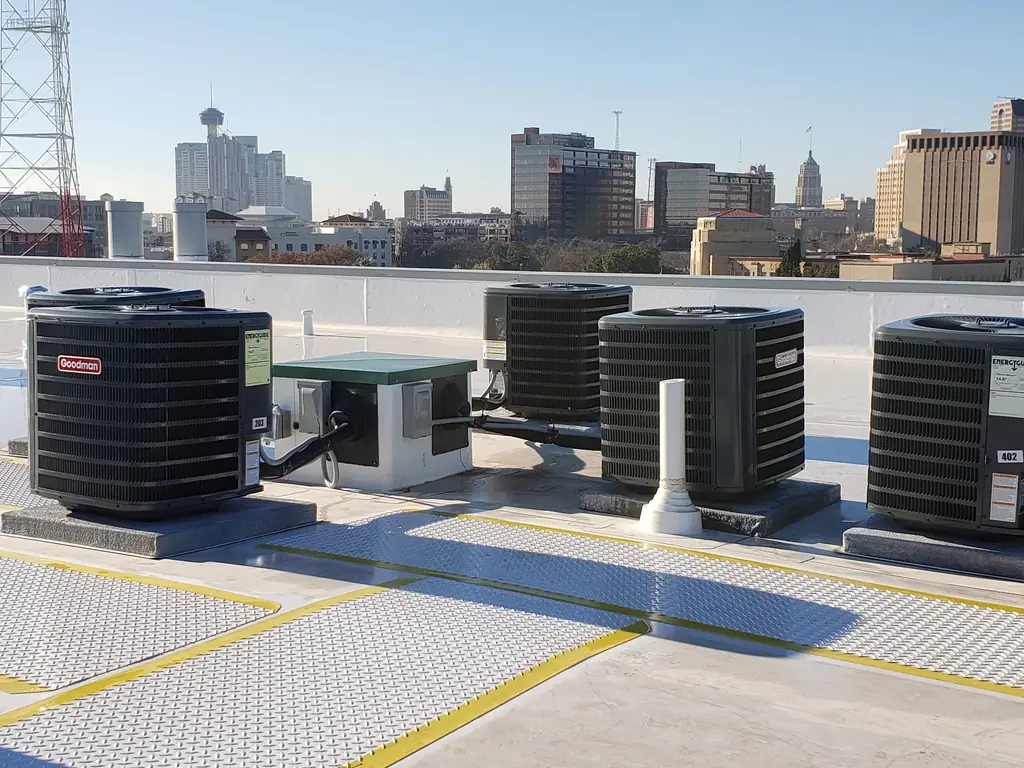
If your AC system seems to work harder here than it did wherever you lived before, that's not just a feeling. San Antonio summers put a specific combination of stress on a residential system that a lot of climates simply don't, and understanding what's actually happening helps explain why regular maintenance matters more here than in a lot of the country.
Run hours that don't let up
In much of the country a system gets real breaks, cool nights, shoulder seasons, stretches where it barely runs. Around Selma, Schertz, and the rest of the San Antonio metro, a system can run for months with only short overnight relief, and sometimes not even that during the hottest stretches. That's simply more hours on the compressor, the fan motors, and every electrical component in the cabinet than the same equipment would see in a milder climate, and it's a big part of why the parts we check every spring, capacitors, contactor points, compressor windings, wear out on a predictable schedule here.
Dust and pollen load the coils faster
Texas has a long pollen season and plenty of dust, and both settle on a condenser coil sitting outside all year and an evaporator coil pulling air through the house. A coil coated in that buildup can't transfer heat the way a clean one does, which is the exact reason poor coil condition can rob a system of real cooling capacity even when nothing else is wrong with it. It's also why we check and clean coils as a standard part of every check-up rather than only when a customer mentions weak airflow.
Humidity adds a second job to the system
A South Texas summer is humid as well as hot. Pulling moisture out of the air is a real part of what your AC does every time it runs, not a side effect. That's more condensate moving through the drain line than a dry climate ever produces, which is exactly why a clogged condensate line is one of the more common issues we see here, and why we check and clean that drain on every visit rather than treating it as an afterthought.
Older systems feel every bit of this first
The combination of long run hours, coil buildup, and heavy condensate load doesn't hit every system equally. A unit that's ten or fifteen years past its install date has less margin to absorb all three at once than a newer one does, which is part of why a system that seemed fine last August can start showing weaker airflow or longer run times this year without anything obvious having changed. It isn't usually one dramatic failure. It's the slow accumulation of exactly the wear this climate produces, showing up first as reduced capacity and higher bills before it ever shows up as a system that won't turn on.
What a homeowner can actually do between visits
- Change or clean the filter on a regular schedule, since a restricted filter forces the whole system to work against itself
- Keep the area around the outdoor condenser clear of grass clippings, leaves, and anything that blocks airflow into the unit
- Rinse the condenser coil gently with a garden hose when it looks visibly dusty, without bending the fins
- Keep the thermostat set consistently rather than swinging it wide between comfortable and off, which makes the system cycle harder
- Call before a small issue becomes a breakdown, especially anything that sounds different than usual or runs longer than it used to
Why we check-up twice a year here specifically
This is exactly why we've built our maintenance program around two visits a year, spring and fall, rather than one. A climate that runs a system this hard, this long, needs the electrical, refrigerant, and airflow checks on a tighter schedule than a place where the unit gets a real rest most of the year. We've been serving homeowners across Selma, San Antonio, Cibolo, and New Braunfels since 1999, and the pattern hasn't changed in that time, the systems that get checked twice a year last longer and break down less than the ones that only get attention when something already went wrong. Call (210) 492-4426 if it's time to get on that schedule.
Priority Design & Service, (210) 492-4426
Call (210) 492-4426More articles
What Actually Happens During Your Spring AC Check-Up
Every item on our spring checklist exists because we've seen what happens the year it gets skipped.
What's On Our Fall Heating Check-Up, and Why the CO Test Matters Most
A furnace can look fine and still have a cracked heat exchanger. This is what we actually check to make sure yours doesn't.