What Actually Happens During Your Spring AC Check-Up
Every item on our spring checklist exists because we've seen what happens the year it gets skipped.
September 4, 2026 · 3 min read
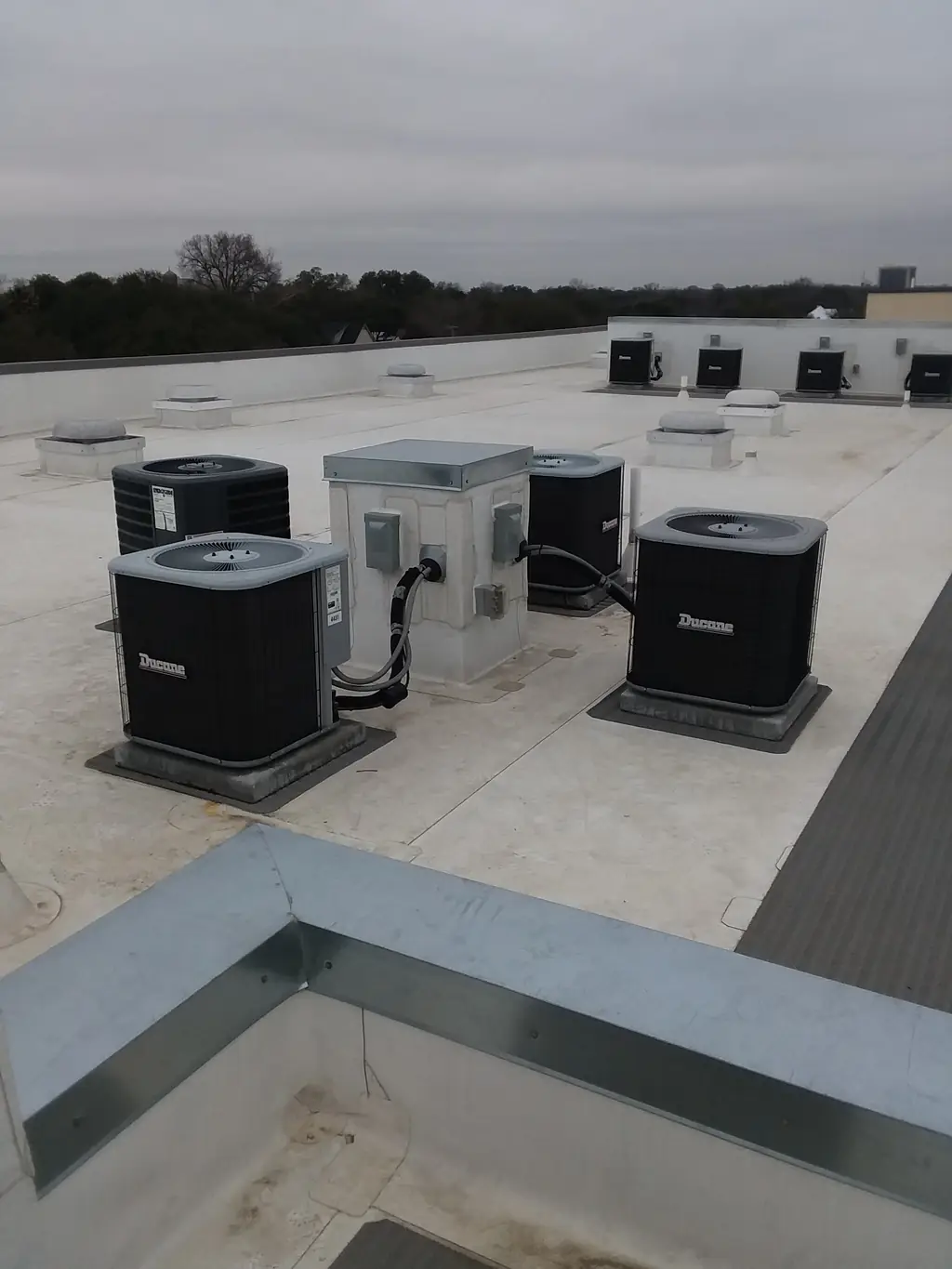
Most people who book a spring check-up couldn't tell you what's actually on the list, and that's fine, that's what we're for. But it helps to know what an hour of a technician's time buys you, especially before a San Antonio summer asks your system to run flat out for four straight months. Here's the real list, and the reasoning behind each part of it.
The full list
- Check refrigerant charge and operating pressures
- Check voltage and amperage to the compressor and all motors
- Check air temperature drop and rise across the evaporator and condenser coils
- Check and lubricate all moving parts
- Adjust belt tension where necessary
- Check and test all pressure safety switches
- Measure superheat and sub-cooling levels
- Ohm the compressor windings
- Check the compressor contactor points
- Check all capacitors
- Clean the condenser coil if needed
- Check the evaporator coil, brush and no-rinse cleaner if needed
- Check filters
- Clean the condensate drain
- Clean and adjust the thermostat
Electrical wear shows up before anything breaks
Capacitors are the part most likely to fail on a hot day, because heat is exactly what wears them out, and a weak one shows up as a compressor or fan motor that hums instead of starting. We check every capacitor's actual rating against its stamped rating, not just whether it's connected. Contactor points get pitted from years of arcing every time the compressor cycles on, and a pitted contactor eventually welds shut or stops making contact at all, so we check those too. Ohming the compressor windings tells us whether the compressor itself, the most expensive single part in the system, still has clean resistance across its windings or is starting to break down internally. None of this is visible from outside the cabinet. It's the difference between catching a five dollar capacitor before it takes out a motor, and replacing the motor.
Refrigerant charge and the two numbers most people never hear about
Checking the refrigerant charge and operating pressures tells us if the system has the right amount of refrigerant, but the pressures alone don't tell the whole story. Superheat and sub-cooling are the two measurements that actually confirm the charge is correct for that specific unit under that day's conditions. An overcharged or undercharged system can still blow cold air at the vent for a while, but it's working harder than it should, wearing the compressor faster, and running up the electric bill the whole time. This is the part of the check-up that separates a real diagnosis from a gauge reading.
Airflow: the part that quietly costs you capacity
A dirty condenser or evaporator coil can't transfer heat the way it's designed to, and a system fighting a dirty coil loses cooling capacity even though nothing is technically broken. We clean the condenser coil when it needs it and check the evaporator coil, brushing it out or applying a no-rinse cleaner where buildup has started. We also measure the temperature drop and rise across both coils, which tells us in hard numbers whether the system is actually moving the heat it's supposed to. Filters and the condensate drain round this section out. A clogged filter chokes airflow across the whole system, and a clogged condensate line backs up and can overflow into the house, which is a bigger repair than the tune-up that would have prevented it.
Moving parts, safety switches, and the thermostat
Belts loosen with use, and a loose belt slips instead of driving the blower at full speed, which shows up as weaker airflow at the vents long before it shows up as a strange noise. We adjust belt tension and lubricate every moving part that needs it. Pressure safety switches exist to shut the system down before low refrigerant or a blocked coil damages the compressor, so we test that those switches actually trip when they're supposed to, not just that they're wired in. Last on the list, we clean and adjust the thermostat itself, since a thermostat reading a few degrees off will run a perfectly healthy system longer than it needs to.
Why spring, and why every year
We've been telling customers around Selma, Schertz, Cibolo, and San Antonio the same thing since 1999: small components fail first, and if they're not caught, they take larger, more expensive parts down with them. That's the whole logic behind checking a system every spring before cooling season and every fall before heating season, rather than waiting for a breakdown. If your system hasn't had a spring check-up yet this year, give us a call at (210) 492-4426 and we'll get you on the schedule.
Priority Design & Service, (210) 492-4426
Call (210) 492-4426More articles
What's On Our Fall Heating Check-Up, and Why the CO Test Matters Most
A furnace can look fine and still have a cracked heat exchanger. This is what we actually check to make sure yours doesn't.
Repair or Replace: How to Think About an Older AC System in South Texas Heat
There's no single age or dollar figure that makes the decision for you. Here's how we actually walk customers through it.