Repair or Replace: How to Think About an Older AC System in South Texas Heat
There's no single age or dollar figure that makes the decision for you. Here's how we actually walk customers through it.
September 4, 2026 · 4 min read
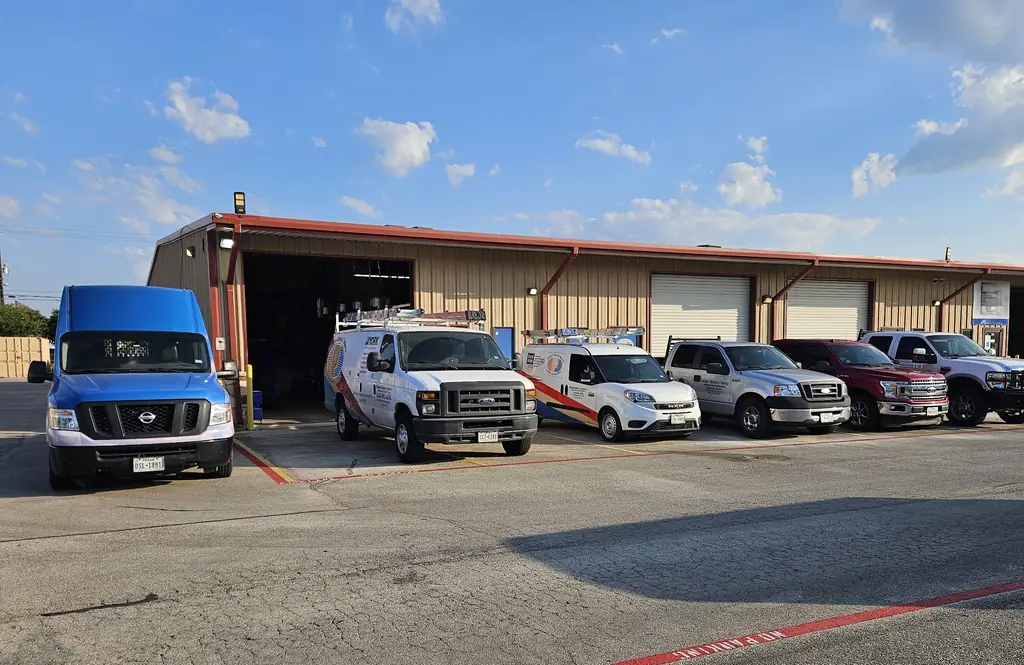
Every summer we get the same call. An older AC unit has just quit, it's ninety-eight degrees outside, and the homeowner on the other end of the phone wants to know one thing: fix it or replace it? There isn't a clean formula that answers that in one sentence, but there is a way to think it through that actually holds up.
Age matters, but it isn't the only thing that matters
A system in its late teens or twenties has usually put in a hard two decades of South Texas summers, and the parts most likely to fail, capacitors, contactors, the compressor itself, wear out roughly on that same timeline. But we've also seen twenty-year-old systems that were installed well, maintained on a real schedule, and still had a healthy compressor when a smaller part failed. Age tells you the odds. It doesn't tell you the specific unit in your specific attic or side yard.
What actually tips the decision
The real question is what failed and what it would cost to fix versus what's likely to fail next. A blown capacitor on an otherwise sound system is a straightforward repair on a system that has years left in it. A failed compressor on a unit already past its expected life is a different conversation entirely, because you'd be putting a major expense into a system whose other original parts are the same age as the part that just failed. When both the outdoor unit and the furnace or air handler are original and both are old, that's usually the point where replacing the whole system starts to make more sense than patching one half of it and waiting on the other.
When a repair is genuinely the right call
Not every service call on an older system ends in a replacement conversation, and we're not looking for a reason to make it one. A blown capacitor, a failed contactor, a refrigerant leak at a fitting rather than in the coil itself, these are all repairs that make sense on a system of almost any age, because they don't tell you anything about the condition of the compressor or the coils. The question we're actually asking on every call isn't how old the unit is. It's whether the part that failed is isolated, or whether it's the first of several parts from the same era that are all approaching the same point in their life at roughly the same time.
How we actually handle that conversation
We've had customers with us for decades, and the way we work with them hasn't changed since 1999: we look at what actually failed, explain what a repair buys you and for how long, and lay out what a full replacement looks like if that's the more honest answer. One long-time customer described exactly this after a twenty-year-old system finally went down, no upselling, no pressure toward extras, just the options laid out clearly enough to make an informed call. We're an authorized Armstrong Air and Goodman dealer, and if replacement is the right call, we sell, service, and repair all major brands, so the recommendation is about your system and your situation, not about pushing a particular unit. If you'd rather spread a replacement out, we work with Service Finance Co. for fixed interest rate financing on new equipment, and estimates on new equipment and sales are free. Service call diagnostics are a separate matter, but if you decide to move forward with a repair or a replacement afterward, that's built into how we quote the work.
What a replacement actually involves, if it comes to that
A full system replacement isn't just swapping the outdoor unit for a newer one. It means matching the indoor and outdoor components to each other correctly, sizing the new system to the house rather than just duplicating whatever was there before, and walking through how the new equipment and thermostat actually work once it's installed, since a lot of newer equipment behaves differently day to day than a system installed fifteen or twenty years ago. That conversation happens before any equipment gets ordered, not after, so there aren't surprises on either end.
The part that matters more than the equipment
We'd rather walk a customer through honest options once than sell a repair that only delays the real decision by a season. Selma, Cibolo, Garden Ridge, the rest of San Antonio: the approach does not change with the address. It is the reason people call us again the next time something goes wrong, years apart, rather than shopping around. If your system is getting up there in years and something just went out, call (210) 492-4426 and we'll come look at what actually failed before anyone talks about what to do next.
Priority Design & Service, (210) 492-4426
Call (210) 492-4426More articles
What Actually Happens During Your Spring AC Check-Up
Every item on our spring checklist exists because we've seen what happens the year it gets skipped.
What's On Our Fall Heating Check-Up, and Why the CO Test Matters Most
A furnace can look fine and still have a cracked heat exchanger. This is what we actually check to make sure yours doesn't.