What HVAC Actually Involves on a Multi-Family Construction Project
Multi-family HVAC is a different discipline from a single residential install, and it starts long before anyone shows up with equipment.
September 4, 2026 · 3 min read
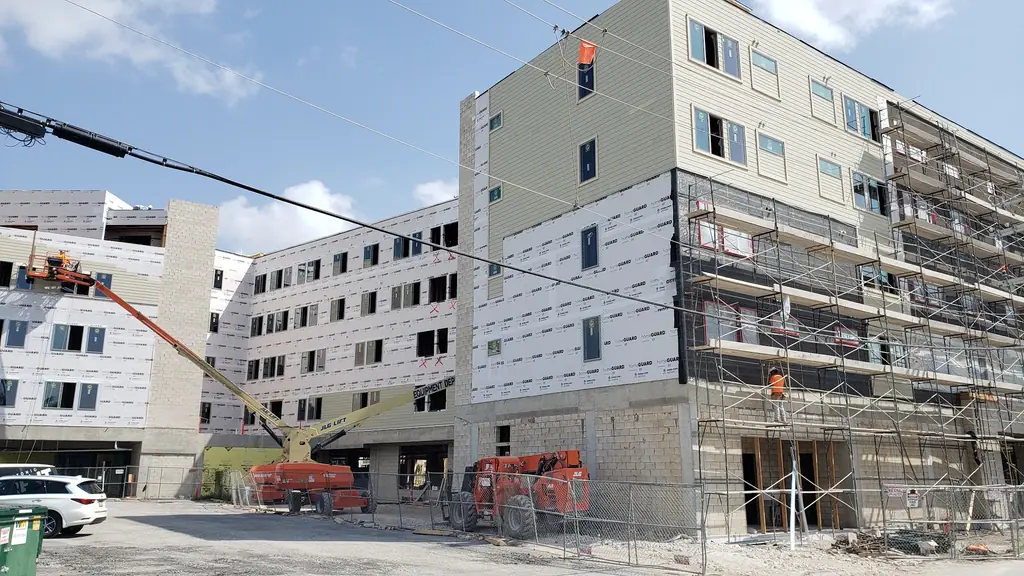
A single-family HVAC install is one system, one house, one homeowner to walk through the new thermostat when it's done. A multi-family project is a different kind of job entirely, closer to construction logistics than to a service call, and it starts well before any equipment reaches the site.
It starts at the bid phase, not the install
We've been doing multi-family work for more than 25 years, and the work that actually protects a project's budget and timeline happens during bid phase and design, not once installers are on site. That means reviewing the mechanical drawings for issues before they become field problems, weighing in on redesign and value engineering where the original spec doesn't line up with what's practical or cost-effective to build, and catching code issues while they're still a conversation on paper rather than a failed inspection. A general contractor or developer who brings HVAC into that conversation early gets a smoother build. One who treats it as a trade to slot in later usually pays for that decision during construction.
Redesign and value engineering, in practice
Original mechanical drawings on a multi-family project don't always survive contact with the actual building once framing is underway, or with a budget that's tightened since the drawings were first stamped. Redesign work on our side means looking at where the spec can be adjusted without compromising performance or code compliance, and flagging it early enough that the change doesn't ripple into electrical, plumbing, or structural trades that have already built around the original plan. Value engineering is the same idea from the budget side: finding where a different approach or a different piece of equipment achieves the same result for less, without the general contractor or developer having to discover that option on their own partway through construction.
Staffing a site is its own discipline
Multi-family HVAC means staffing a job with enough knowledgeable installers and competent supervisors to keep pace with the rest of the trades on site, not falling behind and holding up drywall, inspections, or turnover schedules. It also means coordinating daily with the general contractor's field representatives and the other trades working the same units at the same time, so that duct runs, electrical, and framing aren't fighting each other. On a project running into the hundreds or thousands of units, that coordination is the difference between a project that finishes on schedule and one where mechanical becomes the trade everyone is waiting on.
Coordinating daily with a general contractor's field representatives also means being present in the meetings where scheduling conflicts between trades actually get worked out, rather than finding out after the fact that a duct run needs to move because framing went in differently than the drawings showed. On a project with hundreds of units, that kind of conflict is going to happen somewhere. The difference is whether it gets caught and resolved in a walk-through or discovered during rough-in, when moving it costs real time.
The relationship doesn't end at final inspection
A multi-family HVAC scope runs from the bid phase through construction and into warranty, which means being available after occupancy when a unit's system needs attention and a property manager needs a contractor who already knows the building, not one starting from zero. We've contracted with Crane Contracting Group alone on more than 2,600 multi-family units, completed and in progress, and that kind of repeat relationship only happens when the warranty period is treated as part of the job rather than an afterthought.
Why developers and GCs keep bringing us back
We're a family-owned company that's been doing this since 1999, and on the multi-family side specifically for over 25 years, working across the San Antonio area including Selma, Schertz, and Universal City. General contractors we've worked with describe the same thing: attention to detail, a proactive approach to problems instead of a reactive one, and a team that takes an active daily role in coordination rather than showing up only when there's an issue. That's the kind of relationship that tends to repeat itself. A general contractor who's been through one project with a mechanical contractor that stayed on top of scheduling, code issues, and warranty follow-through has less reason to shop that scope out again on the next one, and that's how a 25-year relationship in this end of the trade actually gets built, one project at a time rather than one bid at a time.
If you're planning a multi-family build and want mechanical involved from the bid phase forward, call (210) 492-4426 and we can talk through where your project stands.
Priority Design & Service, (210) 492-4426
Call (210) 492-4426More articles
What Actually Happens During Your Spring AC Check-Up
Every item on our spring checklist exists because we've seen what happens the year it gets skipped.
What's On Our Fall Heating Check-Up, and Why the CO Test Matters Most
A furnace can look fine and still have a cracked heat exchanger. This is what we actually check to make sure yours doesn't.